EBook & Audio Marketplace
Chagua Format:
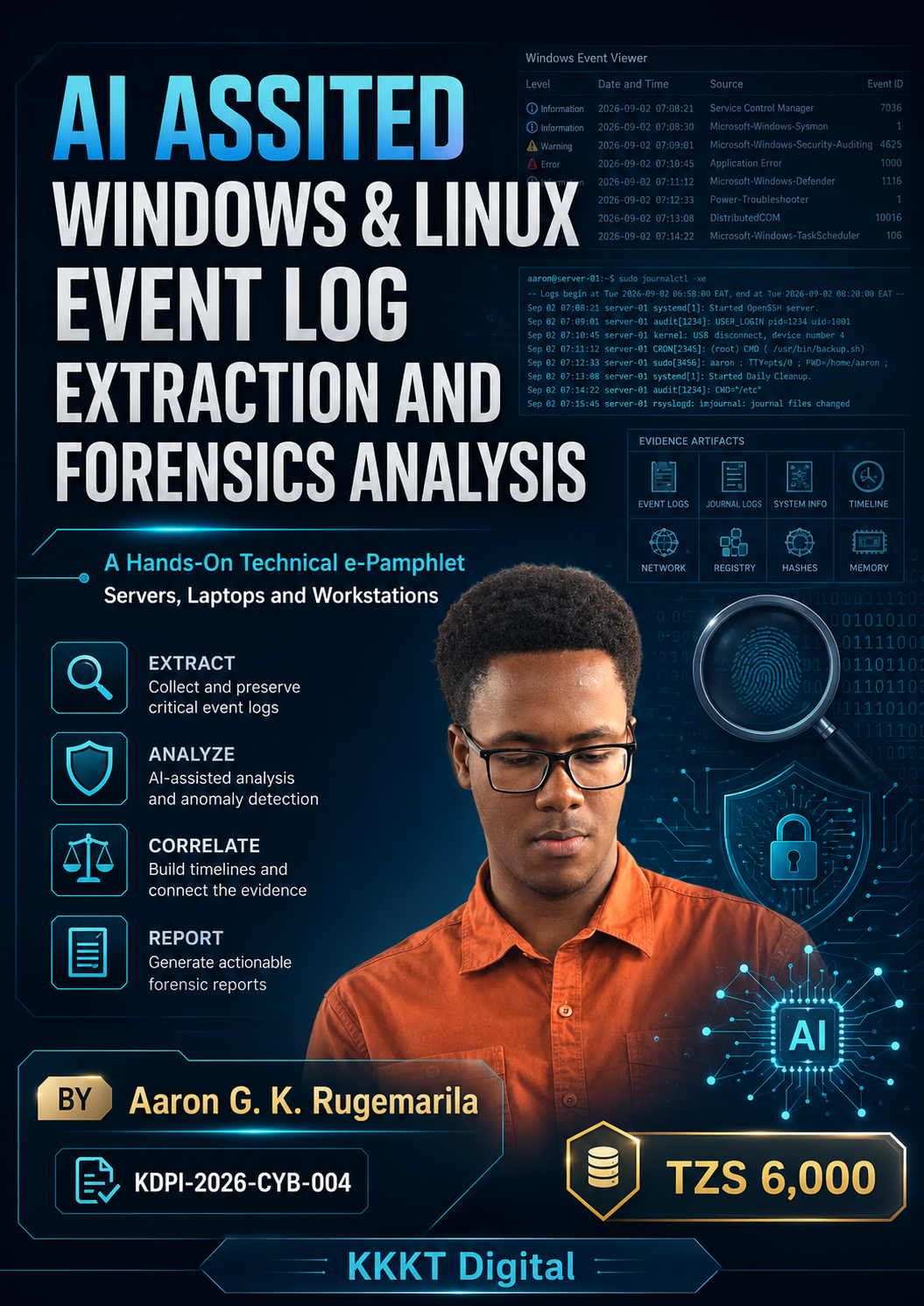
AI Assisted Windows & Linux Event Log Extraction and Forensics Analysis
by Aaron G. K. Rugemarila
About This Book
Every modern computer leaves a digital trail. User logins, application execution, system failures, security alerts, network activity, service operations, configuration changes and many other actions are continuously recorded within Windows and Linux event logs. When these records are properly acquired, preserved and analysed, they can reveal what happened, when it happened, how it happened and which system or account was involved. This makes event-log analysis invaluable not only to digital forensic investigators, but also to systems administrators, cybersecurity auditors, researchers, academicians and students seeking to detect suspicious behaviour, uncover possible fraud, identify malicious applications, investigate unauthorized access, reconstruct security incidents and strengthen the overall security posture of computing environments. Log forensics is therefore more than a post-incident evidence-extraction exercise; it is an essential capability for continuous security monitoring, incident response, auditing, troubleshooting and forensic readiness.
Commercial forensic platforms can automate many of these tasks, but their licensing costs may place them beyond the reach of individual researchers, universities, cybersecurity students, small institutions and organizations working with limited budgets. AI Assisted Windows & Linux Event Log Extraction and Forensics Analysis demonstrates that meaningful forensic work can begin without expensive specialist software. Through practical use of native Windows and Linux utilities, freely available technologies and responsibly applied Generative AI, this e-Pamphlet teaches readers how to extract and preserve logs, verify evidence integrity, identify important security events, correlate activities across systems, construct timelines and accelerate preliminary analysis using AI assistance. The publication is deliberately hands-on and procedural: whether working with a laptop, workstation or server, the reader can follow clearly numbered steps while maintaining sound forensic practices. Rather than replacing the investigator, AI is presented as an analytical assistant that helps transform large volumes of technical log data into actionable leads—while the human examiner remains responsible for validation, evidential interpretation and professional judgement.